
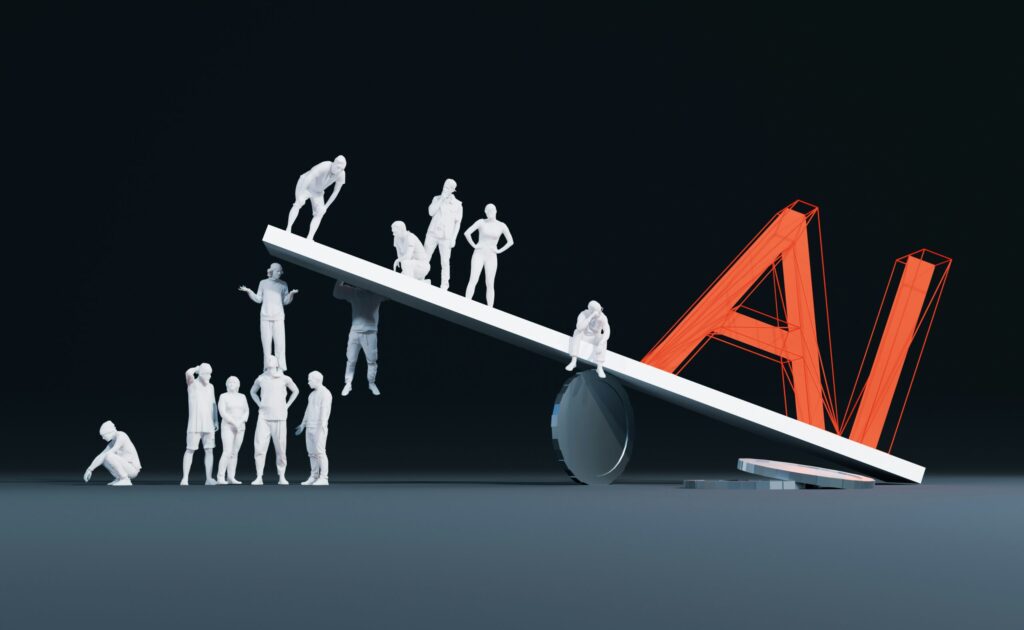
Artificial intelligence has changed market research. Businesses can now collect customer feedback faster, predict buying behavior more accurately, and automate large parts of research that once required entire teams.
But as companies rush to adopt AI, an important question is emerging: are we moving too fast?
AI in market research has become the engine behind customer insights, marketing strategies, and decision-making. The challenge now is not whether businesses should use AI, that much is established to be necessary, it is whether people can keep up with the speed, risks, and ethical questions that come with it.
AI Has Moved From Trend to Everyday Business Tool
A few years ago, AI tools in research were mostly used for simple tasks like transcription or basic sentiment analysis. Today, they are deeply built into how companies understand their consumers. From analyzing customer conversations to predicting shopper buying trends, AI has become core infrastructure.
This rapid growth is changing how businesses operate. Teams are moving faster, campaigns are adjusted in real time, and decisions are increasingly based on machine-generated insights rather than slow manual analysis. And while the benefits are clear: speed, lower costs, access to more data etc, faster does not always mean better.
The Rise of Synthetic Customers and AI Interviews
One of the biggest shifts in AI-driven research is the use of synthetic data.
Synthetic respondents are AI-generated profiles designed to behave like real consumers. Instead of interviewing hundreds of people, companies can create artificial responses that mirror real-world patterns. This is helping businesses save money on research, fill gaps in missing survey responses, and test ideas quickly before launch. For example, a company trying to understand a niche customer segment may no longer need months of recruitment. AI can generate realistic sample data in minutes.
AI is also transforming in-depth interviews. Some platforms now use AI moderators that can ask follow-up questions, detect topic changes, and conduct hundreds of conversations at once. Participants also sometimes feel less judged talking to a machine, which can lead to more honest feedback.
Still, there is a limit to what AI can understand.
A machine may recognize that someone gave a positive answer, but it often misses hesitation, sarcasm, discomfort, or emotional nuance. Human researchers can notice the pause before an answer or the shift in tone that reveals what someone truly feels.
This is why human insight still matters.
Human Insight in the Age of AI Research
AI is powerful, but it does not have lived experience. It cannot fully understand culture, emotion, or human complexity the way people can. Most AI systems are trained on large global datasets that often reflect Western perspectives. That becomes a problem when researching local communities, emerging markets, or culturally sensitive topics.
For example, slang, humor, sarcasm, and social context can easily confuse AI systems. A phrase that sounds positive in one culture may mean something entirely different in another.
This is especially important in consumer research. Buying decisions are emotional, cultural, and deeply personal.
Human researchers bring empathy, cultural awareness, ethical judgement, creativity, and emotional intelligence – qualities AI still lacks.
The Future of Market Research Is Hybrid
At OnePulse Africa, we have long believed that the future is not AI replacing humans, but humans working alongside AI. We get the best results from our ‘hybrid intelligence’ where AI handles speed and scale while we provide context, interpretation, and ethical oversight.
Businesses also need to rethink how they show up online. As consumers increasingly rely on AI-generated answers instead of traditional search engines, brands must focus on becoming trusted sources that AI systems reference and recommend.
So YES, AI may be accelerating market research, but human understanding is still what turns data into meaningful decisions.


